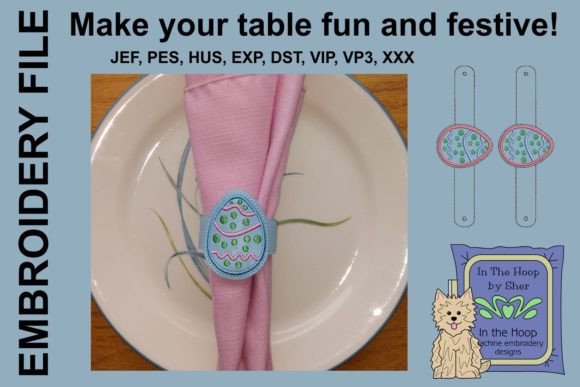
Easter Egg Napkin Ring: A Craft Fair Seller’s Review
As an embroidery designer who spends weekends hunched over a sewing machine and weekdays optimizing Etsy listings, I am constantly scanning for designs that offer high perceived value with manageable production time. When reviewing a new asset for the upcoming season, my primary filter is always practicality: Will this sell? Is it easy to produce in batches? And does it photograph well? Today, we are putting the Easter Egg Napkin Ring design under the microscope. This isn’t just about whether the stitches look pretty; it is about whether this machine embroidery design can hold its own on a crowded craft fair table alongside tote bags, aprons, and tea towels.
First Impressions and Visual Appeal
The title Easter Egg Napkin Ring immediately suggests a seasonal, giftable item. From a design perspective, napkin rings occupy a unique niche. They are small enough to be affordable impulse buys but large enough to showcase intricate stitching. Based on the description—two per 5x7 inch hoop—they promise efficiency. In the world of commercial embroidery, time is money. A design that allows you to stitch two units simultaneously without compromising quality is instantly attractive.
Visually, these rings tend to lean toward the cute, festive, or farmhouse aesthetic depending on your thread choices. Because they are circular objects, they naturally draw the eye. When placed on a booth table, they create a sense of rhythm and repetition. Unlike a flat patch that might get lost in a pile, a napkin ring has dimension. It catches light differently. For an Etsy seller or boutique maker, this physical presence is crucial. It signals that the product is handmade and tangible, not just another digital download.
Product Versatility and Market Fit
Where does the Easter Egg Napkin Ring fit in your current inventory? If you are already selling tote bag design options or apron embroidery, this design serves as a perfect complementary item. Customers often buy a set. They purchase a matching apron and then see the napkin rings and decide to add them to their cart. This increases your average order value.
- Kitchen Towels: Pairing these rings with tea towel embroidery creates a cohesive gift set. The contrast between the heavy fabric of the towel and the delicate ring adds texture.
- Fabric Pouches: You can use the rings as decorative closures or simply display them attached to small linen pouches for a premium look.
- Pillow Covers: While less common, using the motif as a focal point on a small accent pillow can work if the scale is adjusted.
- Market Bags: Attach one ring to the handle of a market bag as a charm. This transforms a standard accessory into a personalized handmade product.
This versatility makes the design a strong candidate for your spring collection. It appeals to home decorators, hosts, and anyone looking for last-minute Easter gifts. It is a small shop product that punches above its weight class because it feels substantial despite its size.
Production Practicality and Batch Efficiency
One of the strongest selling points mentioned is that the design fits two units in a 5x7 inch hoop. For any embroidery file producer or reseller, this is a significant advantage. It means you can double your output per hour compared to single-unit designs. When preparing for a weekend craft fair, speed matters. You want to have ample stock on hand without spending all week at the machine.
The snap-closure mechanism described also aids in storage and shipping. These items store flat, which prevents warping. For online sellers, this means lower shipping costs and fewer damaged goods returns. However, the note about moving snaps closer together for paper use suggests flexibility. You could potentially market these as dual-purpose items, though focusing on the textile application is usually more profitable for finished products.
Photography and Listing Optimization
Before you commit to mass production, consider how this will look in your printable mockup and actual photos. Small items require good lighting. The Easter Egg Napkin Ring needs to show off its details. Ensure your camera lens captures the texture of the stitches. Use natural light to highlight the sheen of your thread colors. If you are selling on Etsy, clear images of the ring snapped closed and open will help customers understand the functionality. A lifestyle shot showing the ring holding a folded napkin on a dining table is essential for conveying scale.
Technical Considerations for Embroiderers
While the concept is sound, execution is everything. As a designer, I advise caution regarding stitch density and detail. Even if the design looks simple, tiny eggs or fine lines can become muddy if the stitch density is too high for the fabric type.
- Fabric Texture: Avoid overly textured fabrics like thick terry cloth for the ring itself. Stick to smooth cottons, linens, or blends that allow the needle to penetrate cleanly. If you are attaching these to other items, ensure the base fabric is stable.
- Hoop Size and Stabilizer: Confirm the required hoop size before starting. A 5x7 hoop is standard, but ensure your machine handles the density correctly. Always use a cut-away stabilizer for durability, especially since napkin rings undergo frequent handling and washing. A tear-away might fray over time.
- Thread Contrast: Choose threads that pop against your fabric. Pastel eggs on white fabric can sometimes lack definition. Opt for slightly deeper pastels or add a contrasting outline stitch if the file allows.
- Test Runs: Never go straight to your final product. Stitch the design assets on scrap fabric first. Check for puckering, thread breaks, or misaligned elements. Inspect the back of the work to ensure the stabilizer removal was clean.
Selling Strategy and Brand Consistency
Incorporating the Easter Egg Napkin Ring into your lineup supports brand consistency. If your shop focuses on cheerful, seasonal home goods, this item fits right in. It reinforces your identity as a maker who understands both aesthetics and utility. At a craft fair, having a variety of sizes and types of products helps attract different buyers. Some people come for the big statement pieces like aprons; others come for the small, sweet accents like these rings. By offering both, you capture the full spectrum of buyer intent.
Furthermore, this design lends itself well to bundling. Create an "Easter Table Setting" bundle that includes a tea towel, a set of napkin rings, and perhaps a matching placemat. Bundling increases sales velocity and moves inventory faster. For digital sellers, offering this as part of a larger spring collection can boost visibility through cross-promotion.
Final Verdict
The Easter Egg Napkin Ring is a smart addition to any embroiderer’s catalog. It balances ease of production with high visual appeal. It is quick to make, easy to ship, and highly giftable. By paying attention to technical details like stabilizer choice and thread contrast, you can ensure a professional finish that justifies a premium price point. Whether you are stocking a physical booth or updating your online shop, this design offers a solid return on investment for your creative efforts. Just remember to check all licensing terms and test thoroughly before hitting the production line. Happy stitching!